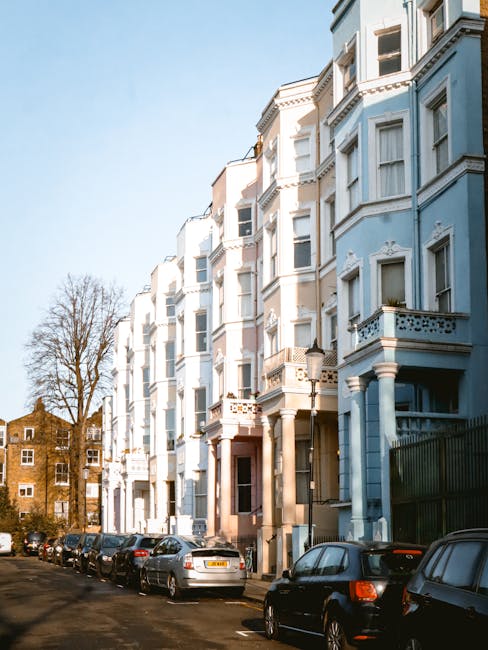
Westbourne Grove (W2) to Lancaster Gate moves -- Notting Hill routes
Posted on 07/05/2026
Westbourne Grove (W2) to Lancaster Gate Moves: Notting Hill Routes, Planning Tips, and a Practical Local Guide
Moving from Westbourne Grove in W2 to Lancaster Gate looks short on a map, but anyone who has done it knows the details matter. One-way turns, parking pressure, loading access, timing around school runs, and the general rhythm of Notting Hill routes can all shape how smooth the day feels. If you are planning a flat move, a family move, or even a small office relocation, this guide breaks down the journey in a practical way so you can plan with confidence.
We will look at why the route matters, how local access typically works, what to check before moving day, and how to avoid the small mistakes that create big delays. You will also find a checklist, a comparison table, and a real-world example to help you prepare properly rather than guess your way through it.

Why Westbourne Grove (W2) to Lancaster Gate Moves Matters
This is one of those local moves that seems straightforward until the practical realities appear. Westbourne Grove sits in a busy, high-demand part of Notting Hill, where residential streets, shopfronts, visitor traffic, and delivery activity can all overlap. Lancaster Gate, meanwhile, brings its own challenges: controlled parking, busy main-road movement, and a layout that can feel easy from the outside but unforgiving when a van is waiting in the wrong place.
The reason this route matters is simple: a short move still needs proper sequencing. If you do not think about access, parking windows, and item protection, the time lost can be out of proportion to the distance travelled. That is especially true if you are moving fragile furniture, awkward pieces, or several flights of stairs without a lift.
For people planning ahead in Notting Hill, it also helps to understand the wider area. A few local guides can be useful background reading, including local insights on living in Notting Hill, smart tips for buying property in Notting Hill, and a guide to Notting Hill's neighbourhood feel. They are not move manuals, but they do help you understand why the area behaves the way it does on moving day.
Practical takeaway: On short London moves, access planning often matters more than mileage. The better you manage loading, parking, and entry points, the easier the move becomes.
How Westbourne Grove (W2) to Lancaster Gate Moves Works
At a high level, the move is a short cross-neighbourhood relocation. In practical terms, it usually involves leaving a busy W2 address, navigating through local streets and main roads, and arriving at a Lancaster Gate property that may have restrictions on stopping, unloading, or waiting.
Typical route decisions are shaped by three things: the size of the vehicle, the time of day, and the exact collection and drop-off addresses. For example, a small van may find more flexibility on narrow local streets, while a larger removal vehicle may need stricter timing and a more carefully chosen approach. If the property is in a mansion block or period conversion, lift access and porter arrangements can also change the plan significantly.
It is wise to treat the move as two separate operations:
- Collection planning from Westbourne Grove, including item staging, protecting hallways, and checking loading access.
- Delivery planning at Lancaster Gate, including parking, entry routes, lift use, and where items should be placed once they arrive.
That sounds obvious, but many people only focus on the drive between the two addresses. In London, the drive is rarely the hard part. The hard part is everything around it.
If the move involves unwanted items or pre-move decluttering, it can also be sensible to coordinate with local waste and clearance services or a targeted option such as house clearance in Notting Hill. That can save you from paying to move things you no longer need.
Key Benefits and Practical Advantages
A move between Westbourne Grove and Lancaster Gate offers a few genuine advantages compared with a longer relocation. First, the short distance usually means less time in transit, which lowers the chance of damage and reduces the stress of coordinating the day. Second, if the move is tightly planned, you can often complete it within a single daytime slot rather than stretching it across several hours.
There is also a financial advantage, even if costs depend on the service, access conditions, and number of items. Shorter travel time can reduce labour time and limit the need for repeated trips. That does not mean it will be cheap by default; it means efficiency is easier to achieve when the route is local and the plan is good.
Other practical benefits include:
- Faster turnaround for tenants leaving a rental and moving into a new Lancaster Gate address.
- Lower disruption for families trying to keep the day predictable.
- Better scheduling for office or studio relocations where downtime matters.
- Easier coordination if you need a man and van service for a few larger items.
For readers comparing moving support options, it may help to review removal services in Notting Hill, man and van support in Notting Hill, or a more comprehensive home removals service if the job includes larger furniture and multiple rooms.
Who This Is For and When It Makes Sense
This type of local move is a strong fit for several situations. A tenant moving from a Westbourne Grove apartment to Lancaster Gate may want a quick, tidy relocation with minimal disruption. A homeowner moving between nearby addresses may care more about care and coordination than raw distance. A student or young professional might simply need a practical and affordable solution for boxes, a bed frame, a desk, and a few awkward bags.
It also makes sense in these situations:
- You are moving out of a flat with narrow stairs or limited lift access.
- You need a same-day move between two W2 and central London addresses.
- You have furniture that is large but not enough to justify a full-scale removal crew.
- You need packing help and do not want to improvise with supermarket boxes at the last minute.
On the other hand, if your move includes specialist items, a piano, or a substantial amount of furniture, you may need something more tailored. For example, furniture removals in Notting Hill or even piano removals support may be more appropriate than a simple van booking.
Truth be told, not every move needs a huge team. But underestimating access problems is a common way to turn a simple local move into a long afternoon.
Step-by-Step Guidance
1) Confirm exactly what is moving
Start by listing every item that needs to travel. Separate essentials, fragile items, furniture, and anything you are still deciding about. This is not just housekeeping; it affects van size, loading time, and how many people you need.
2) Check both building access points
Look at the collection address in Westbourne Grove and the destination at Lancaster Gate. Is there lift access? Any loading bay? Any stairs, codes, or concierge procedures? If either property has restricted access, note it early. The question is not whether access exists in theory, but whether it will work on a moving day with furniture in hand.
3) Choose the right travel window
London traffic patterns matter, even for short cross-town moves. Mid-morning or early afternoon may be easier than peak commuting hours, but local conditions vary. If school traffic, market activity, or visitor flow affects the route, build in extra time.
4) Prepare parking and stopping plans
Make sure the vehicle can stop as close as possible to each property without causing avoidable risk or delay. This is one reason many people use a smaller vehicle or a flexible removal van in Notting Hill for local moves.
5) Protect items before the van arrives
Wrap glass, disassemble what you can safely dismantle, and label boxes by room. A little preparation prevents the very common "where does this go?" pause once you reach Lancaster Gate.
6) Load in a sensible order
Heavy, stable items should go in first. Fragile pieces and essentials should be easy to reach. If you are moving from a flat, the order of loading often needs to match the stair layout, not just the item list.
7) Unload with placement in mind
At the destination, place furniture and boxes in the right rooms first. You can sort later. During the move itself, clear room placement saves time and reduces rehandling.
8) Deal with leftover waste properly
If the move reveals broken furniture, damaged packaging, or items you decided not to keep, arrange proper disposal rather than leaving it to drift into the corner of your new place. Options such as furniture disposal or waste collection in Notting Hill can keep the move tidy and compliant.
Expert Tips for Better Results
One of the most effective tips is also one of the simplest: reduce the number of decisions you need to make on the day. Label boxes clearly. Separate "open first" items. Keep chargers, documents, medication, and keys with you. Moving day is not the time to play hide-and-seek with a kettle.
Other useful tips include:
- Measure doorways and stair turns before move day if you have bulky furniture.
- Photograph complex electronics before disconnecting them.
- Use colour-coded labels for bedrooms, kitchen, and living areas.
- Keep a small tool kit handy for quick disassembly or reassembly.
- Choose a provider that explains access clearly rather than simply quoting a vehicle size.
If the route involves a lot of stopping or a tighter central London schedule, it can also help to ask about contingency planning. A good mover should be comfortable discussing what happens if loading is delayed, if parking is not as expected, or if the lift is out of service. That sort of honest preparation is worth more than a polished sales pitch.
For moving jobs that overlap with decluttering or clear-outs, you may also find office clearance in Notting Hill or builders waste disposal helpful, especially if you are renovating or relocating from a workspace.
Common Mistakes to Avoid
The most common mistake is assuming the route is too short to worry about. That mindset usually causes problems. Another frequent issue is booking a vehicle without checking whether it can legally and practically stop close to both properties.
Watch out for these traps:
- Underestimating item volume and running out of van space.
- Ignoring access constraints like stairs, lifts, and entry codes.
- Packing too late, which creates rushed, fragile boxes.
- Not separating essentials for the first night.
- Forgetting disposal needs and leaving waste for later.
- Choosing speed over suitability when specialist handling is needed.
A surprisingly common issue is the "one more box" problem. You know the one: a last-minute pile appears in the hallway and somehow expects the van to absorb it. A better approach is to finish packing 24 hours before moving day, then use the final window for only the essentials that genuinely must remain accessible.
Tools, Resources and Recommendations
You do not need fancy software to move well, but a few simple tools make a difference. A measuring tape, marker pens, strong tape, bubble wrap, furniture blankets, and a basic toolkit are usually enough for a local move of this kind. A notes app or checklist app also helps if you are juggling multiple rooms or coordinating with a landlord or building manager.
Useful resources to consider include:
- Route planning apps for checking timing and congestion patterns.
- Inventory lists for tracking boxes and large items.
- Building contact details for concierge or access confirmation.
- Service pages that clarify what is included, such as services overview, packing and boxes support, and pricing and quotes.
If you want to understand the local area from a wider lifestyle perspective, these pages can help too: a day in Notting Hill, Notting Hill's top event venues, and a guide to buying Notting Hill property. They are especially helpful if your move is tied to a new tenancy, purchase, or long-term relocation decision.
Law, Compliance, Standards, and Best Practice
For a move like this, most compliance questions are practical rather than dramatic, but they still matter. If waste is created during clearance or the move, it should be handled responsibly and in line with accepted UK waste-handling practice. That means using a legitimate service, separating reusable items where sensible, and avoiding fly-tipping or leaving rubbish in shared spaces.
If you are using a removals or clearance company, it is sensible to check basic trust signals: clear terms, transparent pricing, insurance and safety information, and straightforward contact details. You can review pages such as insurance and safety, terms and conditions, privacy policy, and about us to understand how a provider presents its standards.
Best practice also includes:
- clear communication before the booking
- reasonable care with both properties
- accurate information about access and item size
- respect for neighbours, porters, and building rules
- careful handling of personal data during address changes
If a move includes leftover commercial items, check whether you need a dedicated office clearance or business waste solution. For additional background on service ethics and operational standards, some readers also like to review a provider's recycling and sustainability approach and company information.
Options, Methods, or Comparison Table
There is no single correct way to complete a Westbourne Grove to Lancaster Gate move. The best method depends on how much you are moving, how quickly you need it done, and how much access complexity exists at either end.
| Method | Best for | Strengths | Limitations |
|---|---|---|---|
| Self-move with hired van | Very small loads and confident packers | Can be economical; flexible timing | Higher risk of delays, lifting strain, and poor packing |
| Man and van | One-bedroom flats, partial moves, local relocations | Practical for short routes; easier on access-heavy streets | May not suit large households or specialist items |
| Full removals team | Families, larger furniture sets, complex access | More support, better handling, less stress | Usually more expensive than smaller-scale options |
| Hybrid move plus clearance | Moves with decluttering or leftover items | Keeps the new home tidy; saves moving unnecessary items | Needs more coordination and planning |
If you are unsure, a hybrid approach often works best in Notting Hill. For example, you might use a removals service for the move itself and a separate clearance or disposal service for items you do not want to bring forward. That combination is often more efficient than trying to force everything into one booking.
Case Study or Real-World Example
Imagine a tenant leaving a second-floor flat on Westbourne Grove and moving into a smaller but better-located property near Lancaster Gate. The household includes a sofa, bed frame, desk, two wardrobes, six boxes of books, kitchenware, and a few awkward plants that have become much more attached to the occupant than expected.
The first challenge is access. Westbourne Grove has a narrow stairwell and limited space at the kerb. Lancaster Gate has better internal access, but the building asks for a narrow unloading window and clear notification in advance. Without planning, this could easily become a two-hour delay.
So the move is handled in stages:
- The non-essential items are packed the day before.
- The furniture is partially dismantled and wrapped.
- The booking is timed away from the busiest traffic period.
- One person handles keys and building communication while the other manages box placement.
- Unwanted items are separated for disposal rather than loaded unnecessarily.
The result is not magic. It is simply a well-managed local move. The team spends less time waiting, the items arrive in better condition, and the occupant is unpacking the first-night essentials before the day starts feeling endless.
If you are preparing for a similar move and want to compare service types, a good starting point is man with a van in Notting Hill for lighter loads or flat removals for more structured support.
Practical Checklist
Use this checklist in the final 48 hours before moving day.
- Confirm both addresses and postcodes.
- Check stair, lift, and doorway access at both ends.
- Book the correct vehicle size.
- Agree the arrival window and any building restrictions.
- Separate fragile items and label them clearly.
- Pack an essentials bag for the first night.
- Measure any furniture that needs disassembly.
- Keep keys, ID, and contact details accessible.
- Arrange disposal or clearance for unwanted items.
- Protect floors and walls where needed.
- Notify the building manager or concierge if required.
- Do a final walk-through before the van leaves.
Quick summary: if you can answer the questions about access, timing, and item volume before the move starts, you are already ahead of most people.
Conclusion
Westbourne Grove (W2) to Lancaster Gate moves are short on distance but rich in detail. That is why they reward good planning. When you understand the local routes, check both properties properly, and match the moving method to the actual job, the whole process becomes calmer, faster, and easier to control.
The smartest approach is usually the simplest: pack early, measure access, choose a sensible time window, and use the right level of support for the amount you are moving. Whether you need a compact man and van setup, fuller removal help, or a clearance add-on for unwanted items, the key is to treat the move as a local operation with proper logistics, not as a quick errand.
Get a free quote today and see how much you can save.